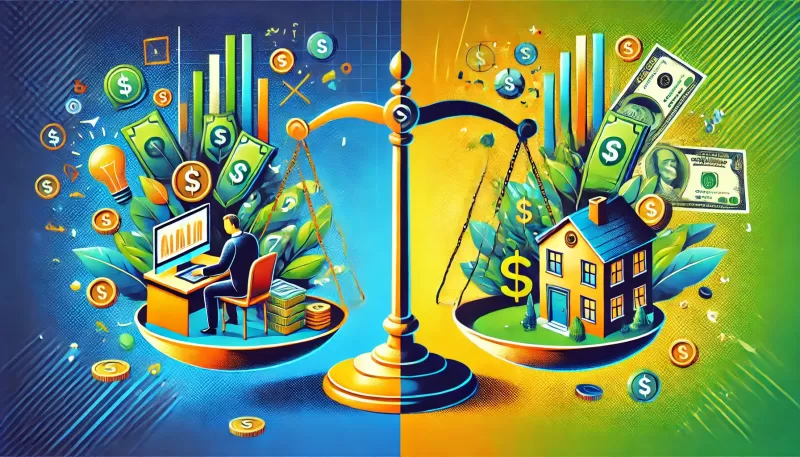
In the world of finance and business, understanding the differences between various types of income is crucial for anyone aiming to build sustainable wealth and achieve financial stability. Among these types, active income and passive income stand out as the most important sources of revenue that individuals can rely on to achieve their financial goals. While both can contribute to financial independence, there are significant differences in how this income is generated, the effort required to maintain it, and its impact on your daily life. In this article, we will delve into the details of these two types of income, highlighting the differences between them and how to strike a balance to maximize your financial potential.
What is Active Income?
1. Basic Definition
Active income, also known as earned income, is the money you receive in exchange for performing a service or working. In other words, it's the income you earn directly from your efforts. Active income requires you to be continuously engaged in generating this income, whether through a full-time job, freelancing, or managing a business that demands your constant presence.
2. Examples of Active Income
- Salaries and Wages: This is the most common form of active income. Employees in companies and organizations earn their wages in exchange for the hours they work.
- Freelancing: If you work as a freelancer in fields like graphic design, writing, programming, or other skilled professions, the money you earn is considered active income.
- Business Profits: If you run a business yourself and are actively involved in its daily operations, the profits you generate from this business are considered active income.
- Commissions: If you work in sales or real estate, the commissions you earn from closing deals are a form of active income.
3. Characteristics of Active Income
- Continuous Effort: Active income heavily relies on the effort you put in. If you stop working, the income flow stops.
- Time-for-Money Trade: In most cases, active income is determined by the amount of time you spend working. The more time you work, the more income you generate.
- Job Security: Active income is the most secure for individuals seeking immediate financial stability, as money is earned directly for the work done.
What is Passive Income?
1. Basic Definition
Passive income, on the other hand, is the income that is earned regularly without requiring continuous effort or direct involvement after the initial work is completed. Passive income is characterized by its ability to keep flowing even when you are not actively engaged in its generation. This type of income is considered more independent, as it can provide a financial stream even during periods of rest or when you are busy with other pursuits.
2. Examples of Passive Income
- Rental Income: If you own properties (such as apartments or commercial buildings) and rent them out, the rent you receive from tenants is a form of passive income.
- Dividends: If you invest in stocks and benefit from the periodic dividends paid by companies, this income is considered passive.
- Royalties: If you have authored a book, released a piece of music, or developed a software program and earn royalties from sales or licenses of these products, these earnings are passive income.
- Blogs and Websites: If you run a website or blog that generates income through ads or affiliate marketing, this is passive income, especially if the site operates automatically without needing continuous management.
3. Characteristics of Passive Income
- Independence: You can earn passive income without needing to work regularly. After the initial setup, the income can continue to flow with minimal effort.
- Initial Investment: Passive income usually requires an initial investment of time, money, or effort. However, after that, the required effort is very minimal.
- Diversity: Passive income can come from multiple sources, providing financial protection in case one source fails.
Comparing Active and Passive Income
1. Effort Required
- Active Income: Requires continuous effort and physical presence. Without work, income stops.
- Passive Income: Requires initial effort but can continue to provide income even after you stop working.
2. Time-for-Money Trade
- Active Income: Income is usually tied to the time you spend working. If you work longer, you earn more.
- Passive Income: Income is not directly tied to time. You can earn even while you are sleeping or spending time with your family.
3. Financial Security
- Active Income: Provides immediate security, as money is paid directly for the effort. However, relying entirely on active income can be risky if you lose your job or if your health declines.
- Passive Income: Offers long-term stability. It can act as a safety net if you have multiple sources of passive income, especially in emergencies or financial crises.
4. Growth Potential
- Active Income: May be limited to a certain ceiling, as it depends on the available working hours. You may find yourself unable to increase your income beyond a certain point without exhausting your time and energy.
- Passive Income: Has significant growth potential. You can expand your investments or create new sources of passive income to increase cash flow without needing to increase effort.
How to Achieve a Balance Between Active and Passive Income
1. Build a Strong Base of Active Income
At the beginning of your career, it's important to build a strong base of active income. This will help you meet your immediate financial needs and provide the financial foundation from which you can invest in passive income opportunities.
2. Start Exploring Sources of Passive Income
Once you've achieved financial stability through active income, begin exploring sources of passive income. This might include investing in real estate, buying stocks, or developing digital products that can generate ongoing income.
3. Diversify Your Income Streams
It's important not to rely on just one source of income, whether it's active or passive. Instead, try to diversify your income streams to ensure financial security. For example, you can work a steady job (active income) and invest in real estate (passive income) at the same time.
4. Gradually Shift Towards Passive Income
Over time, as your passive income streams grow, you can reduce your dependence on active income. This can give you more freedom in your personal and professional life, allowing you to retire comfortably or pursue other interests without worrying about money.
Conclusion
Whether you seek active or passive income, it's important to understand the differences between them and how each type of income can contribute to building your financial future. Active income provides immediate and direct security but requires continuous effort. On the other hand, passive income can offer long-term financial independence but requires an initial investment.
By balancing active and passive income, you can build a diverse and sustainable income portfolio that helps you achieve financial independence and enjoy a life free from financial stress.
 الإنجليزية
 صمم موقعك الأن!